DPP basicsCompliancePublished · Updated · 13 min read
Digital Product Passport for small fashion brands: it's not as hard as you think
The Digital Product Passport is easier for small brands than large ones. Here's what you actually need, what you can skip, and a 30-day plan to get started.
Written by Vincent Ghilione, Founder, Wetrack
Let’s get the uncomfortable part out of the way first: the Digital Product Passport sounds intimidating for small fashion brands. But it shouldn’t.
You run a small fashion brand. Maybe it’s just you and one other person. Maybe you have a small team. You design, you source, you sell, you ship, you do customer service, you do your own bookkeeping, and now someone’s telling you that you also need to become a compliance expert because the EU is rolling out something called a Digital Product Passport.
It sounds like it was designed for H&M and Zara, not for you.
We understand the reaction. But here’s what we’ve seen after working with dozens of small brands: the Digital Product Passport is actually easier for small brands than for large ones. Not harder. Easier. And by the time you finish this article, you’ll understand why.
Table of Contents
- Why a Digital Product Passport is simpler for small brands
- The five things you actually need (and probably already have)
- “But I don’t have a sustainability team”
- What you can skip (for now)
- The real cost for a small brand
- A small brand has one advantage nobody talks about
- A practical 30-day plan
- What about brands even smaller than small?
- Stop waiting for permission to start
- Frequently asked questions
Why a Digital Product Passport is simpler for small brands
Large fashion brands have hundreds of suppliers across dozens of countries, legacy ERP systems that don’t talk to each other, siloed teams that don’t share data, and thousands of SKUs that each need their own data profile. Getting all of that aligned for DPP compliance is a multi-year, multi-million-euro project.
You? You probably work with one or two garment manufacturers. You know what your products are made of because you chose the fabrics yourself. You know where they’re sewn because you visited the factory, or at least you’ve been on a video call with the owner. Your supply chain isn’t complicated. It’s short.
That’s not a weakness. It’s a massive advantage.
The DPP asks you to document what your product is made of, where it’s manufactured, how to care for it, and whether it contains harmful chemicals. For a small brand with close supplier relationships, most of this information is either already in your head, in your tech packs, or one email away from your manufacturer.
The brands that will struggle with the DPP are the ones with sprawling, opaque supply chains where nobody knows who actually makes what. That’s not you.
The five things you actually need (and probably already have)
Let’s strip away all the regulatory jargon and talk about what a basic DPP requires. Here’s the short version.
- Your product name, brand, and a unique identifier. You already have a product name and a brand. The unique identifier is a GTIN, a number you register with GS1. If you sell on Amazon or through retailers, you may already have one. If not, registration through GS1 costs vary by country but is accessible even for one-person brands.
- Material composition with percentages. Not “cotton blend” but “95% organic cotton, 5% elastane.” Your fabric supplier has this information on their spec sheets or test certificates. If you’ve ever filled out a Shopify product listing with material details, you’ve done a version of this already.
- Country of manufacturing. Where is your garment assembled? You know this. Write it down.
- Care instructions. You already have these, they’re on your garment labels. For the DPP, you just need them in a structured digital format rather than printed on a woven label.
- A statement about harmful chemicals. Specifically, whether your product contains any Substances of Very High Concern (SVHCs) under EU REACH regulation. For most garments made with standard fabrics from reputable suppliers, the answer is “no.” You just need a written statement from your supplier confirming this.
That’s it. That’s the baseline. If you can answer those five things, you can publish a basic Digital Product Passport today.
“But I don’t have a sustainability team”
You don’t need one.
The DPP isn’t a sustainability report. It’s not a CSR strategy document. It’s not a 200-page corporate responsibility framework. It’s a structured product data record. It contains facts, not narratives.
In a large brand, creating a DPP requires coordination between the sustainability team, the product team, the tech team, the supply chain team, and probably a compliance officer. That’s five departments and a dozen meetings before a single passport gets published.
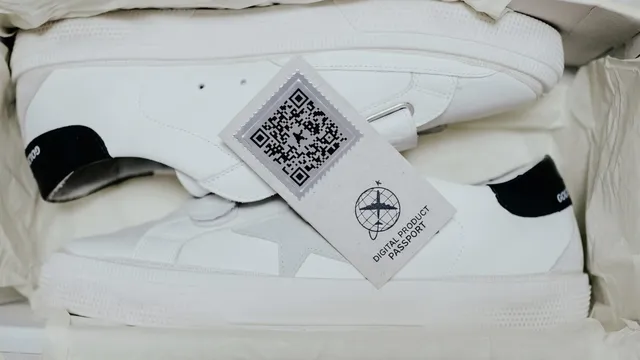
In a small fashion brand, it requires you spending an afternoon collecting information you mostly already have, entering it into a DPP platform, and clicking “publish.” The platform handles the technical requirements, the GS1 Digital Link URL, the JSON-LD structured data, the QR code generation, the EU registry compliance.
You bring the product knowledge. The platform brings the infrastructure.
What you can skip (for now)
One of the biggest sources of anxiety for small brand owners is the assumption that a DPP requires full lifecycle assessment data, Tier 4 supply chain mapping, and detailed carbon footprint calculations from day one.
It doesn’t.
The regulation is designed to be phased in. The first version of the textile DPP, expected to come into effect around the first half of 2029 at the earliest, will likely focus on core data fields: material composition, manufacturing origin, care instructions, and chemical compliance. The more advanced requirements, detailed LCA data, Product Environmental Footprint scores, deep traceability, are expected in later phases, potentially around 2030 and beyond.
For a small brand right now, here’s what you can set aside without guilt.
- Full Life Cycle Assessment. Valuable if you can get it, but not expected to be mandatory in the first DPP phase. If you want to add environmental data later, you can, the DPP is a living document.
- Tier 3 and Tier 4 traceability. Where was the cotton grown? Where was the yarn spun? These are difficult questions for any brand, let alone a small one. The initial requirement is likely to cover Tier 1 (your garment manufacturer) and possibly Tier 2 (your fabric supplier). That’s manageable.
- Repairability and circularity scoring. These are on the EU’s radar for future phases, but they’re not expected in the first wave of requirements.
Start with what you know. Fill in the rest over time. The DPP platform you choose should let you add and update information incrementally, not force you to have everything perfect before you can publish anything.
The real cost for a small brand
Let’s talk numbers, because “how much will this cost me?” is always the elephant in the room.
- GS1 registration. This is the one unavoidable cost. Prices vary by country. In most European countries, a small package of GTINs (10,100 numbers) costs a one-time setup fee plus an annual renewal of roughly €50,€150. Not free, but not a burden.
- DPP platform. Several platforms offer free or low-cost tiers for small brands. Wetrack, for example, offers a free plan with up to 5 published passports and unlimited product imports, enough to run a complete pilot. Paid plans for small catalogues typically start around €29/month. Compare this to hiring a consultant or building a custom system, and the economics are clear.
- Time. This is the real cost, and it’s worth being honest about it. For your first 3,5 products, expect to spend about one to two days gathering data, entering it into a platform, and testing your QR codes. After that, each additional product takes much less time because you’ve already built your material library and supplier records.
- Total for a small brand pilot: under €200 and a couple of days of your time. That’s it. No consultants, no enterprise contracts, no six-month implementation projects.
A small brand has one advantage nobody talks about
There’s something that gets lost in the DPP conversation, and it matters enormously for small brands: consumers care more about transparency from you than from a multinational.
When H&M publishes a Digital Product Passport, consumers view it with scepticism. They’re looking for the catch, the disclaimer, the gap between the marketing and the reality. The trust deficit is enormous.
When a small, independent brand publishes a DPP, when a customer scans your QR code and sees the name of the actual factory where their garment was made, the specific fibres used, the care instructions written by someone who clearly knows the product, it lands completely differently. It feels personal. It feels honest. It feels like the kind of brand they want to support.
For a small brand, the DPP isn’t just a compliance requirement, it’s a genuine competitive advantage. A trust signal that’s more credible coming from you than from a brand a hundred times your size. The intimacy and directness that comes naturally to small brands is exactly what makes a DPP powerful.
A practical 30-day plan
If you’re a small brand owner reading this and thinking “fine, I’ll do it,” here’s a realistic plan that doesn’t require quitting your day job.
- Week 1: Gather what you already have. Pick three products. For each one, pull together the material composition, manufacturing country, and care instructions. Check if you have GS1 GTINs. If not, start the registration process with your local GS1 office.
- Week 2: Talk to your suppliers. Send one email to your main fabric supplier asking for exact fibre composition and a REACH/SVHC compliance statement (our supplier data guide has templates). Send one email to your garment manufacturer confirming their factory name, address, and country. That’s two emails.
- Week 3: Set up your DPP platform. Sign up for a platform. Import your products (if you’re on Shopify, this can be a one-click process). Enter the data you’ve collected. Review the generated passport pages. Adjust your brand colours and logo so the passports feel like yours.
- Week 4: Publish and test. Generate QR codes for your three pilot products. Print them on hang tags or labels. Scan each one to make sure it works. Share the passport link with a friend or customer and ask what they think.
You now have three live Digital Product Passports. You’re ahead of the vast majority of fashion brands on the planet.
For the full implementation process, see our step-by-step guide.
What about brands even smaller than small?
We get asked a lot about edge cases. Here are some honest answers.
“I make everything by hand. Do I need a DPP?” If you sell into the EU market, yes, assuming the delegated act doesn’t carve out specific exemptions (none have been announced). But the good news is that handmade producers often have the best supply chain visibility of anyone. You bought the fabric, you know exactly what it is, you made the garment yourself. Your DPP will be the most honest one out there.
“I only sell locally, not online.” If you sell within the EU, your products are on the EU market. The DPP applies. But it doesn’t need to be complicated, a QR code on your hang tag linking to a simple passport page is enough.
“I sell vintage or secondhand clothing.” The DPP requirement applies to new products placed on the market for the first time. Resold or secondhand items that were originally placed on the market before the enforcement date are expected to be exempt.
“I use deadstock fabrics and can’t always trace the origin.” This is a real challenge, and an honest one. You won’t be able to provide the same level of traceability as a brand working with new materials. But you can still create a passport with what you know, the fibre composition (which can be tested if unknown), the fact that it’s a deadstock material, and your own manufacturing details. Honest documentation of what you know and what you don’t is better than no documentation at all.
Stop waiting for permission to start
The biggest risk for small brands isn’t that the DPP is too complex. It’s that the noise around it, the consultant pitches, the enterprise case studies, the regulatory jargon, makes it feel like something that isn’t for you. So you wait. And then the deadline arrives and you’re scrambling.
The reality is much simpler. You know your products. You know your suppliers. You know your materials. All you need is a system that takes that knowledge and turns it into a structured, scannable, publishable Digital Product Passport.
That system exists today. You can start for free. And you can have your first passport live before the end of the month.

Scan or click this QR code to see a sample Digital Product Passport, then start building yours.
Frequently asked questions
Is there a minimum brand size for DPP compliance?
No minimum brand size has been announced for the DPP requirement itself. Unlike some related regulations (the unsold goods destruction ban exempts micro and small enterprises), the DPP is expected to apply to any brand placing textile products on the EU market, regardless of size. The thinking is that transparency shouldn’t depend on how large a company is. Whether the final delegated act introduces any practical relief for very small operators remains to be seen, but planning on being in scope is the safest approach.
How is a DPP different from the product description on my Shopify store?
Your Shopify product description is unstructured marketing copy. A DPP is a structured data record with standardised fields, a machine-readable format (JSON-LD), a unique GS1-compliant identifier, and a dedicated public URL accessible via QR code. Think of your product description as a story you tell. The DPP is the verified evidence behind that story, in a format that regulators, AI systems, and recycling facilities can read and act on.
I can’t afford a sustainability consultant. Can I still create a DPP?
Absolutely. A DPP platform replaces the need for a consultant by walking you through the process step by step, telling you what data is required, what’s optional, and helping you structure your existing product knowledge into the right format. If you know what your products are made of and where they’re manufactured, you have what you need to start. No consultant required.
Will the DPP give my competitors access to my supplier information?
You control what level of detail is public. While the DPP requires certain data points to be consumer-facing (like material composition and manufacturing country), you can choose how much additional detail to reveal. You won’t be forced to publish your specific factory names or pricing arrangements unless you want to. The regulation requires transparency about the product, not about your commercial relationships.
Can I use one DPP for my entire collection?
No. The DPP is product-specific, you need at least one passport per unique product (per GTIN). However, products that share the same materials, manufacturing origin, and care instructions across all sizes and colours of a single style can share one passport. So a t-shirt available in five colours and four sizes might only need one DPP, not twenty.
What if the regulation gets delayed or softened?
It’s possible, regulatory timelines have shifted before. But the ESPR framework is already law, and the DPP has survived the “Omnibus” simplification wave that weakened other EU sustainability regulations. Even in a scenario where enforcement is delayed by a year, every hour you spend organising your product data is time well invested. Structured product information improves your operations, your customer communication, and your supplier relationships, with or without a regulatory mandate.
I already print care labels and material composition on my garments. Isn’t that enough?
It meets current labelling regulations under Regulation 1007/2011, but it won’t satisfy the DPP requirement. The DPP demands a digital, machine-readable, publicly accessible data record linked to each product via a unique identifier and QR code. Your care label is the physical starting point, the DPP is its digital, structured, verifiable extension.
This article reflects the regulatory landscape as of April 2026. We’ll update it as the textile delegated act is published. Stay informed.
Next step
See what a passport would already contain for one of your products.
Free, one product, from your public data. You get a dated report and a sample passport you can open.
Vincent builds Wetrack and its sister product Weloop from Carouge, Switzerland. 25 years of building digital products for brands, now spent on product data, passports and what the ESPR actually asks of a fashion brand.
LinkedIn (opens in a new tab)Reviewed for accuracy by the Wetrack team. Regulatory dates come from official EU sources and are re-checked when the rules move; the date at the top of this page tells you when. This guide is information, not legal advice.