

For fashion brands on Shopify
Your first Digital Product Passport starts with the data you already have.
Connect Shopify and Wetrack organises your existing product information, shows what is missing and helps you turn it into a reviewed, branded passport and QR code.
See what your product passport could look like
Free to preview. No Shopify install required.
Already working with independent fashion brands




Start small
One product first. A collection when you are ready.
You do not need to prepare your whole catalogue or understand every regulation before you begin. Start with the information you already have and improve it step by step.

Choose a product from Shopify
Connect your store and Wetrack brings in the product information already there, including images, descriptions, variants and SKUs.
Add what lives outside Shopify
Upload certificates, supplier information, spreadsheets and other product documents you already have.
Let the AI prepare the record
Wetrack organises reusable information, suggests where it belongs and highlights what is still missing. You review every suggestion.
Review and publish
Approve the information you trust, publish the branded passport and reuse what you have learned across the rest of the collection.
How the AI helps
The AI handles preparation. You make the decisions.
Wetrack finds, sorts and matches product information so you spend less time copying fields by hand. It does not invent missing facts and nothing is published until you approve it. Think of it as a careful assistant, not an autopilot.
What customers see
A passport that feels like part of your brand.
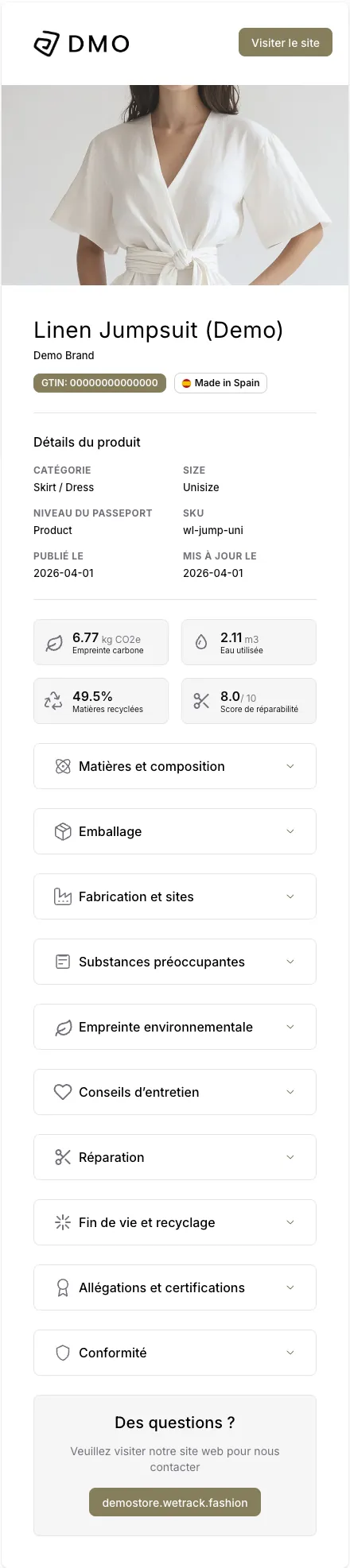
Once you approve the product information, Wetrack turns it into a branded passport customers can open from a QR code. Show materials, origin, care instructions, certifications and the evidence behind your claims in one place. Update the same passport whenever better information arrives.
Example shown using a live Wetrack passport.


Behind the passport
Know what you have. See what is missing. Keep the proof together.
The QR code is only the visible part. Wetrack helps you build and maintain the product record behind it.
Find the gaps
See which composition, origin, supplier, care and evidence information is complete, missing or still needs confirmation.
Check DPP readiness about Find the gaps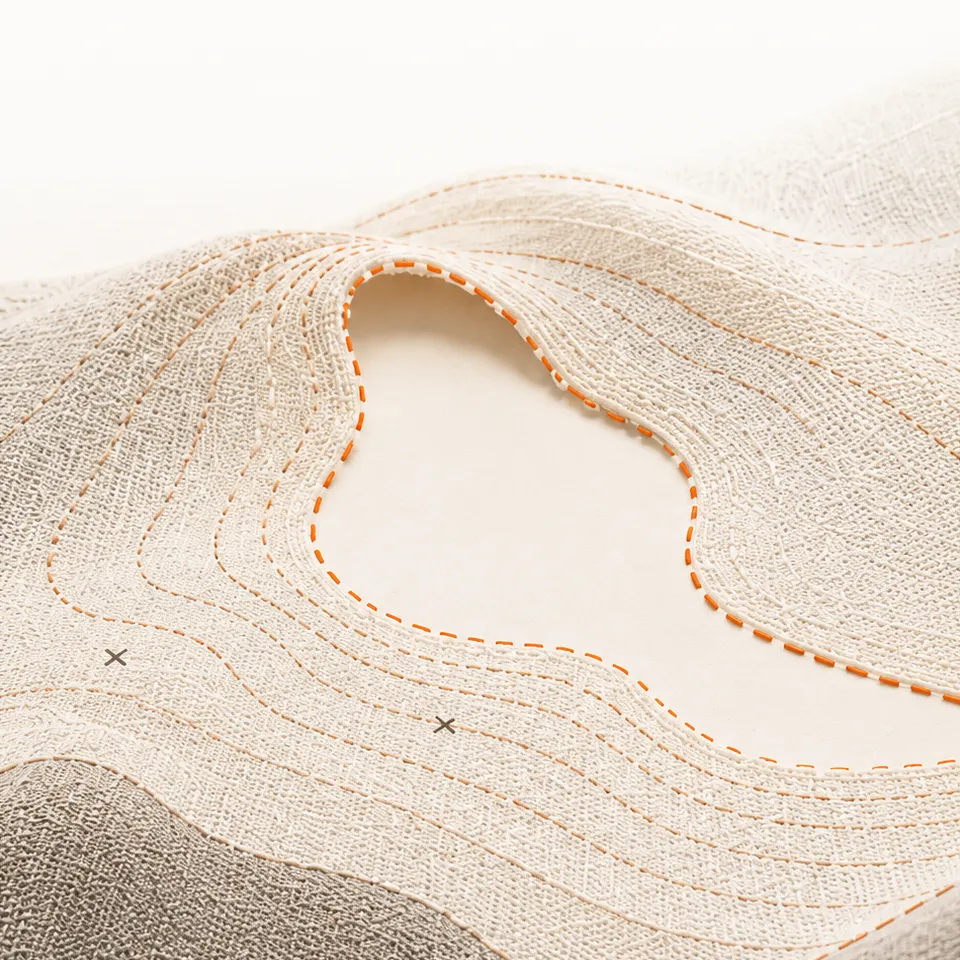
Keep evidence connected
Attach certificates and supporting documents to the products and claims they support, so you can see what is backed up and what is still self-declared.
See how product evidence works about Keep evidence connected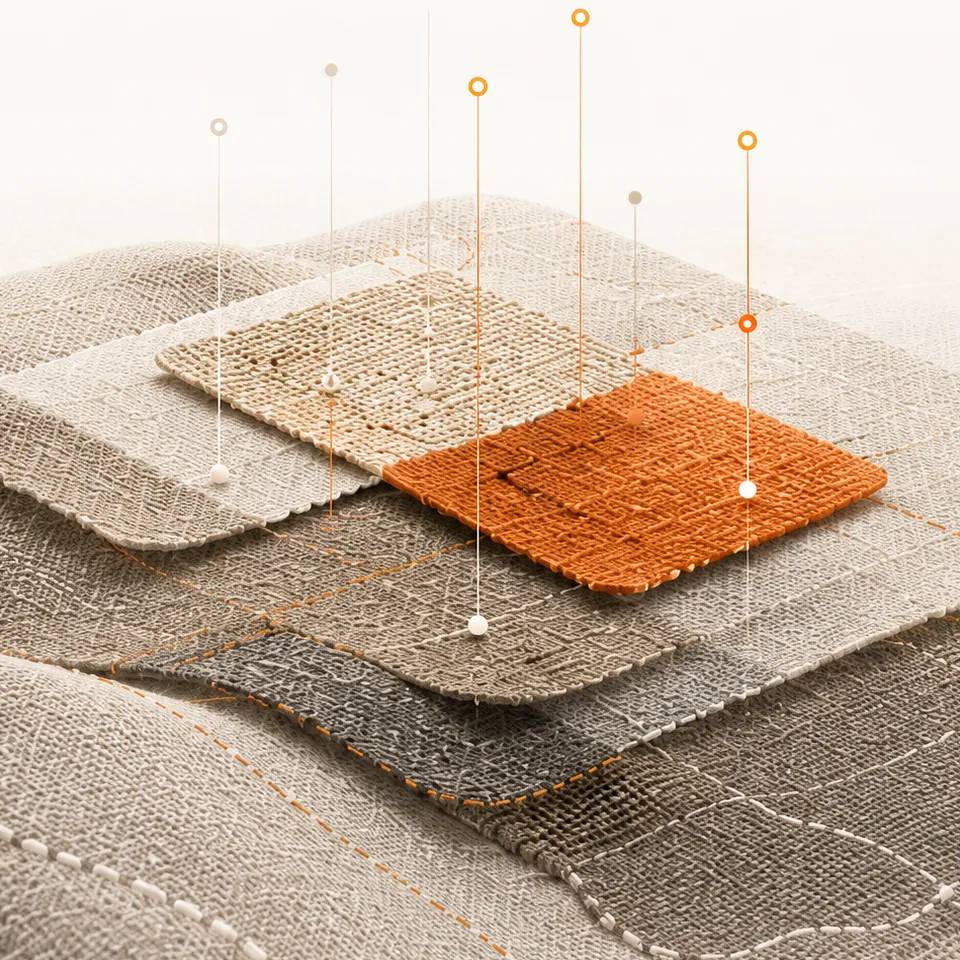
Prepare for changing requirements
See which product-information requirements are relevant to the markets you sell in, what you already cover and what still needs attention.
Explore compliance checks about Prepare for changing requirements
Built with small fashion brands
A practical tool, shaped with the people who use it.
Simple, public pricing
Start free. Move to a paid plan when one product becomes a collection.
The Free plan lets you import as many products as you want and publish five passports. Starter covers 25 published passports and adds the tools a small brand needs to work through a first collection.
Free from product to passport
Import your catalogue, review what is missing and publish up to five passports with QR codes. The Free plan has no expiry.
No credit card or sales call
Start on your own, see the result and decide whether Wetrack fits before you pay anything.
Help when you need it
Use the guided workflow yourself, or contact us when you want a person alongside you for the next collection.
Straight answers
What small fashion brands usually ask first
Still have a question? Ask us directly
Do I need all my product information before I start?
No. Start with one product and the information you already have. Wetrack shows the empty fields and helps you work through them. You can publish with gaps; information that is not there simply does not appear.
What does Wetrack import from Shopify?
Product names, images, descriptions, variants and SKUs. The connection is read-only, so Wetrack does not edit your products, theme or SEO. You add composition, suppliers, production details and certificates when Shopify does not hold them.
What does the AI assistant actually do?
It helps find, categorise and match information to the right product. You review every suggestion. It does not invent missing facts and it cannot publish anything on your behalf.
Is the textile Digital Product Passport already mandatory?
Not yet. The European Commission currently plans to adopt the textile-specific ESPR rules in Q4 2027, followed by a transition period of at least 18 months. That points to 2029 at the earliest under the current timetable. Starting now is useful because gathering product, supplier and evidence information takes time, and the same record can evolve as the final requirements become clear.

Start with one product
See what your first passport could look like today.
Preview one product from its public page in a few minutes, or install the Shopify app to build, review and publish your first passport.
Free plan with no expiry. No credit card. Start with the information you already have.