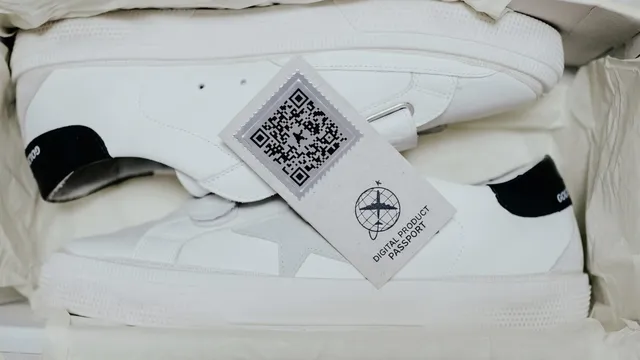
TechnologyDPP basicsPublished · 10 min read
GTIN, GS1, and the DPP: understanding product identification standards
GTINs are the product identifiers your digital product passport needs. Learn how GS1 works, what a Digital Link does, and how to register for DPP compliance.
Written by Vincent Ghilione, Founder, Wetrack
Every DPP guide mentions GTINs. Every DPP platform asks for them. Every compliance checklist lists them as a requirement. But very few resources actually explain what they are, why they matter, and how to get them, in terms that make sense to a fashion brand owner who’s never needed a barcode before.
Understanding the connection between GTIN and the digital product passport is essential for any fashion brand preparing for EU compliance. By the end of this article, you’ll understand what a GTIN is, how GS1 works, what a GS1 Digital Link does, why all of this matters for your digital product passport, and exactly how to get set up, even if you’ve never interacted with GS1 in your life.
Table of Contents
- What is a GTIN?
- What is GS1?
- Why does the digital product passport need GTINs?
- What is a GS1 Digital Link?
- How to register for GTINs: a step-by-step process
- Common questions about GTINs and the DPP
- The bigger picture: why standards matter for your data
What is a GTIN?
A GTIN, Global Trade Item Number, is a unique number that identifies a specific product. It’s the number encoded in the barcode on any product you’ve ever scanned at a supermarket checkout. The same system applies to fashion.
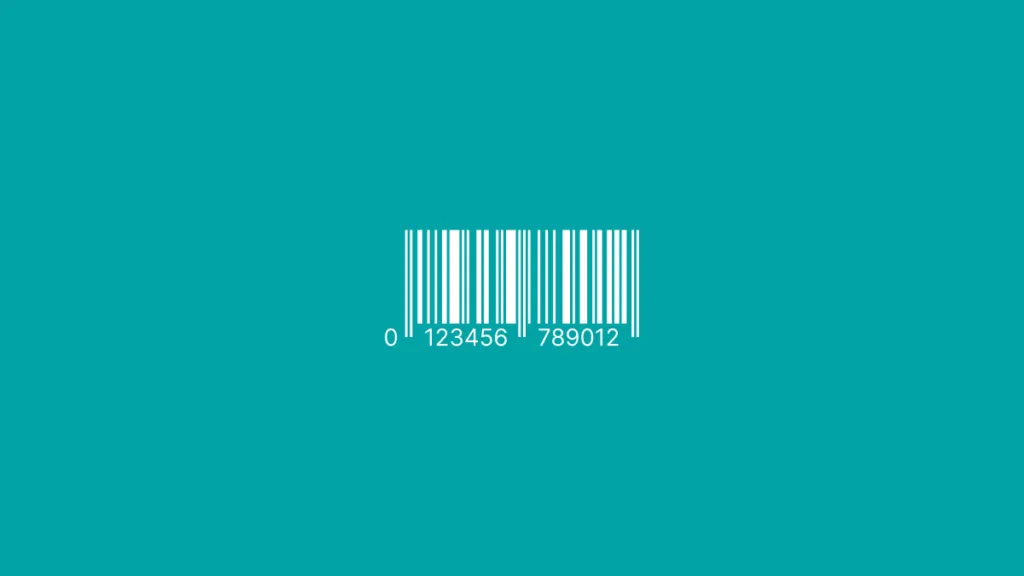 An EAN-13 Barcode: This is the standard symbology used for consumer products at the point of sale globally. It encodes a 13-digit GTIN (Global Trade Item Number), allowing scanners to instantly identify individual retail items.
The key word is “unique.” A GTIN isn’t just a number you make up. It’s assigned through a global system managed by GS1, an international standards organisation, which guarantees that no two products in the world share the same number. Your black crew-neck t-shirt in size M gets one GTIN. The same t-shirt in size L gets a different one. The same t-shirt in white gets yet another one. Each unique variant, each combination of style, colour, and size, gets its own identifier.
For fashion, the most common GTIN format is GTIN-13 (13 digits), which is the same as an EAN-13 barcode. If you sell into North America, you may also encounter GTIN-12 (UPC format). Both work for DPP purposes.
A GTIN is composed of three parts: a GS1 Company Prefix (assigned to your brand), an Item Reference (assigned by you to each product variant), and a Check Digit (calculated automatically to prevent errors).
What is GS1?
GS1 is the global organisation that manages the GTIN system, and many other supply chain standards. It’s a not-for-profit with local offices in over 100 countries. When you register for GTINs, you register through your local GS1 office (GS1 Switzerland, GS1 France, GS1 UK, GS1 US, etc.).
GS1 doesn’t sell products. It manages the numbering system that makes global commerce work. Every barcode on every product in every supermarket in the world runs on GS1 standards. The DPP extends this same infrastructure to digital product transparency.
For the DPP, two GS1 standards matter most: the GTIN (your product identifier) and the GS1 Digital Link (the URL format that connects your product to its passport). More on the Digital Link in a moment.
Why does the digital product passport need GTINs?
The DPP requires that every product has a unique, globally standardised identifier. The ESPR doesn’t technically mandate GTINs by name, it requires identifiers compliant with ISO/IEC 15459:2015. But in practice, the GTIN is the dominant candidate for textiles, and every major DPP platform, standards body, and EU guidance document references GS1 as the expected identification system.
Here’s why a GTIN matters more than an internal SKU or a random number you assign yourself.
Uniqueness. Your internal SKU “BLK-TEE-M” might be unique within your catalogue, but another brand could use the same code. A GTIN is globally unique, no other product on the planet shares it.
Interoperability. The EU DPP registry, customs systems, retailer databases, and marketplace platforms all speak GS1. A GTIN is the common language that connects your product to every system it touches.
Longevity. A GTIN is permanent. Once assigned to a product, it stays with that product for its entire lifecycle, through sale, resale, recycling, and DPP registry checks. Internal SKUs get changed when you switch platforms or reorganise your catalogue. GTINs don’t.
Registry compliance. From July 2026, the EU DPP registry will store unique product identifiers. Those identifiers need to follow an internationally recognised standard. GTINs are that standard. Check the DPP compliance timeline for key dates.
What is a GS1 Digital Link?
This is where most brand owners’ eyes start to glaze over. But the concept is genuinely simple.
A GS1 Digital Link is a URL, a web address, that contains your product’s GTIN in a standardised format. It looks like this:
https://wetrack.fashion/01/07612345678901That’s it. The /01/ prefix indicates that what follows is a GTIN. The number is your product’s GTIN-13. The domain can be your own website, your DPP platform, or GS1’s public resolver.
When this URL is encoded into a QR code, something powerful happens. A customer scans the QR code with their phone, and the URL opens in their browser, taking them to the product’s Digital Product Passport page. A retail point-of-sale scanner reads the same QR code and extracts the GTIN from the URL structure, using it for checkout exactly like a traditional barcode.
One QR code. Two functions. Consumer transparency and retail checkout from the same symbol. This dual functionality is the reason the global retail industry is migrating from traditional linear barcodes to 2D QR codes under what GS1 calls “Sunrise 2027.”
For DPP purposes, the GS1 Digital Link URL is the identifier that gets registered in the EU DPP registry. It’s the stable, permanent address for your product’s passport. As long as that URL resolves to a live passport page, your product is identifiable and its passport is accessible, regardless of which DPP platform you use.
How to register for GTINs: a step-by-step process
If you don’t yet have GTINs, here’s exactly how to get them.
Step 1: Find your local GS1 office. Go to gs1.org and find the member organisation for your country. If you’re based in Switzerland, that’s GS1 Switzerland. Based in France, GS1 France. Based in the US, GS1 US. Each office handles registration for companies in its territory.
Step 2: Choose your prefix size. GS1 offers Company Prefixes in different sizes based on how many GTINs you need. For a small fashion brand, a prefix that covers 10 to 100 GTINs is usually sufficient. Remember: each product variant (style + colour + size) needs its own GTIN. A t-shirt in 4 colours and 5 sizes = 20 GTINs. Calculate your needs before selecting a package.
Step 3: Register and pay. Registration involves a setup fee (one-time) and an annual renewal fee. Costs vary by country and prefix size. In most European countries, expect €50,€250 for setup and a similar annual renewal for small packages. Some GS1 offices offer discounted rates for micro-enterprises.
Step 4: Assign GTINs to your products. Once you have your Company Prefix, you assign Item Reference numbers to each product variant. Most GS1 offices provide an online management tool where you create products, assign GTINs, and generate barcode files. Assign numbers sequentially, don’t try to build meaning into them (like “01” for t-shirts, “02” for trousers). Sequential assignment is simpler and recommended by GS1.
Step 5: Enter your GTINs into your DPP platform. Once assigned, add each GTIN to the corresponding product variant in your DPP platform. The platform will use these GTINs to generate GS1 Digital Link URLs and compliant QR codes. If you’re on Shopify, our guide on setting up a DPP for Shopify covers the integration details.
The entire registration process typically takes one to two weeks. Don’t leave it to the last minute, GS1 processing times vary by country, and some offices have longer queues than others.
For the full DPP creation process, see our step-by-step guide.
Common questions about GTINs and the DPP
I already have barcodes on my products. Are those GTINs?
If your barcodes were registered through GS1 (which is the case for almost all retail barcodes globally), then yes, the number encoded in your barcode is your GTIN. Check by looking at the 13-digit number printed below your barcode. If it starts with your GS1 Company Prefix, you’re set. Enter these existing GTINs into your DPP platform.
If you bought barcodes from a third-party reseller (not GS1 directly), the numbers may not be officially registered to your company. GS1 and many retailers recommend against using resold barcodes, and for DPP compliance, an officially registered GTIN is the safest path.
Do I need a separate GTIN for every single item (unit-level)?
For product-level DPPs (one passport per style), you need one GTIN per product variant (style + colour + size). For unit-level DPPs (one passport per individual garment), each physical item needs a unique serial number in addition to the GTIN. The GS1 Digital Link supports this through the serial number extension: https://example.com/01/GTIN/21/SERIAL. Most fashion brands will start with product-level DPPs, where a GTIN per variant is sufficient.
I sell on Shopify and already have SKUs. Can I use those instead of GTINs?
Shopify SKUs are internal identifiers. They’re useful for your inventory management but don’t meet the global standardisation requirements for DPP compliance. You need GS1 GTINs as the official product identifiers. However, your DPP platform can map Shopify SKUs to GTINs, so you can maintain both systems without confusion. Shopify also has a “Barcode” field on each product variant specifically designed for the GTIN.
What happens if I change my DPP platform? Do my GTINs and QR codes break?
This depends on the URL structure. If your QR codes use a GS1 Digital Link URL hosted on a domain you control (or on a platform that uses open standards), you can redirect that URL to a new DPP platform without reprinting any QR codes. If your codes use a proprietary URL on a platform’s own domain, switching providers means your existing QR codes stop working. This is one of the most important reasons to choose a DPP platform that uses GS1 Digital Link standards and, ideally, lets you use your own domain or a neutral resolver.
How much do GTINs cost?
Pricing varies by country and by how many GTINs you need. As a rough guide for European GS1 offices: a package of 10 GTINs typically costs €50,€150 for initial setup plus a similar annual renewal. A package of 100 GTINs might cost €150,€350 plus annual renewal. Some offices offer individual GTIN assignments (without a Company Prefix) at lower cost for very small businesses. Check your local GS1 office’s website for current pricing, it’s always published transparently.
Do I need GTINs for products I only sell direct-to-consumer (not through retail)?
Yes, for DPP compliance. The GTIN requirement for the DPP is independent of your sales channel. Even if you never sell through a retailer and never need a scannable barcode at a checkout, the DPP system requires a globally unique product identifier, and the GTIN is the standard that fulfils that requirement.
The bigger picture: why standards matter for your data
GTINs and GS1 Digital Links might seem like technical plumbing, the kind of thing you’d rather not think about. But they’re actually the most important decision you’ll make in your DPP journey, because they determine whether your product data is portable, interoperable, and future-proof.
A GTIN means your product can be identified by any system, anywhere in the world, your DPP platform, the EU registry, a retailer’s database, a recycling facility, or a resale marketplace. It’s one of the core DPP data requirements. A GS1 Digital Link means your QR code can serve multiple purposes from a single symbol, consumer transparency, retail checkout, and regulatory verification.
And critically, open standards mean your data belongs to you. If you build your DPP on a proprietary identification system, your product data is locked into one provider. If you build it on GS1 standards, you can switch platforms, expand to new sales channels, and integrate with future systems, without losing your product identities or reprinting a single QR code.
That’s not just technical hygiene. That’s business resilience.
Scan or click the QR to see what GS1-compliant passports look like:

Start building your DPP on open standards.
Start your pilot, Free forever
This guide reflects GS1 standards and DPP requirements as of April 2026. Stay informed.
Next step
See what a passport would already contain for one of your products.
Free, one product, from your public data. You get a dated report and a sample passport you can open.
Vincent builds Wetrack and its sister product Weloop from Carouge, Switzerland. 25 years of building digital products for brands, now spent on product data, passports and what the ESPR actually asks of a fashion brand.
LinkedIn (opens in a new tab)Reviewed for accuracy by the Wetrack team. Regulatory dates come from official EU sources and are re-checked when the rules move; the date at the top of this page tells you when. This guide is information, not legal advice.