DPP basicsPublished · 7 min read
Digital Product Passport examples: what good actually looks like
Three real Digital Product Passports, teardown-style. What Nobody's Child, the battery industry's Path.Era, and our own sample passport get right.
Written by Vincent Ghilione, Founder, Wetrack
Most of what gets written about Digital Product Passports is about the law. What has to be in scope, by when, for whom. I write plenty of that myself.
But at some point a brand owner stops asking “what does the regulation say” and starts asking a more useful question: what does a good one actually look like when a customer scans it? I went looking for real examples, not mockups, not concept slides. Here are three, and what I think each one gets right.
What is a Digital Product Passport?
Quick definition for anyone new here. A Digital Product Passport (DPP) is a QR code on a product that opens a page with structured data about that specific item: what it’s made of, where it was made, its environmental footprint, and what to do with it at the end of its life. It exists because of the EU’s Ecodesign for Sustainable Products Regulation (ESPR), which will make DPPs mandatory for textiles once the delegated act for the sector is adopted. If you want the full regulatory picture first, our DPP compliance timeline for fashion covers the dates.
What I want to do here is different: look at what’s already live, and pull out the patterns.
Example 1: Nobody’s Child, the fashion brand that actually shipped one
Nobody’s Child is a UK fashion label, stocked in M&S, John Lewis and ASOS. In September 2023 it launched a DPP on its Happy Place collection with Fearne Cotton, built with a technology partner called Fabacus. It’s one of the few fashion DPPs I found that has actually been live for years, not months, which matters, because a lot of “pilots” quietly disappear after the press release.
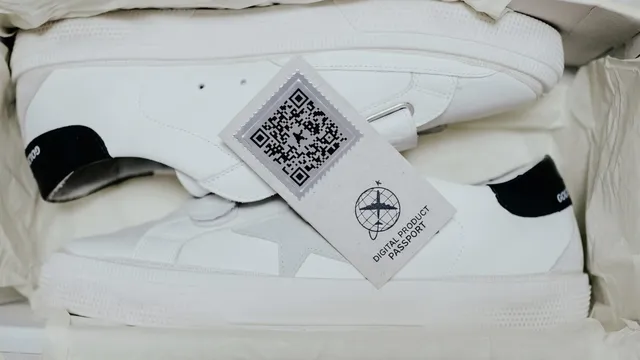
Here’s what the passport does. Every garment gets a QR code sewn into the care label. Scan it, and you land on a page showing the product’s lifecycle carbon footprint, broken down by raw material, manufacturing, logistics, packaging, care and end of use. There’s care advice specific to that product, not generic laundry tips. And there are direct links to circular services: repair, rental, and pre-loved resale.
What I find interesting is what they chose to lead with. Not a certificate wall. Not a paragraph about the brand’s “sustainability journey.” A carbon number, broken into stages, and then an immediate next action: here’s how to make it last, here’s how to resell it. That’s a passport built for someone standing in a shop deciding whether to buy, not for a compliance auditor.
The brand’s CEO, Jody Plows, called it a step toward “full traceability and transparency.” I’d add one thing to that: it’s also a step toward owning the resale conversation. Linking to a brand’s own pre-loved channel from the passport is a small design choice, but it’s the difference between a customer reselling through you or through someone else entirely.
One thing I’d flag rather than copy: the NFT layer. Nobody’s Child paired the passport with a Coinbase collaboration so customers could mint a digital receipt as an NFT. That was a 2023 idea, and I think it’s aged the way most NFT layers from that period have. The passport itself, the QR code, the carbon breakdown, the care advice, still holds up. The blockchain wrapper around it doesn’t add much for most brands starting today.
Example 2: Path.Era, the industry consortium approach (not fashion, but worth studying)
This one isn’t a fashion example, it’s for EV batteries. But I think it’s worth including because it’s the most mature DPP infrastructure in any sector right now, and textiles will end up looking a lot like it once the delegated act lands.
Path.Era is a shared battery passport platform built by BASF, BMW, CATL, Henkel and Siemens, running on an automotive data-sharing network called Catena-X. Battery passports become mandatory in the EU from 18 February 2027 for EV, industrial and light transport batteries, which puts this sector roughly two years ahead of textiles on the regulatory clock.
What’s useful to a fashion brand here isn’t the battery chemistry, obviously. It’s the shape of the solution. Five companies that compete with each other in the market agreed on one shared way to collect and pass along supply chain data, rather than each building an incompatible version. Oliver Ganser at BMW put it plainly: the goal is a “simple and trusted solution to get the job done,” not a proprietary moat.
I think this is the model textile DPPs will converge on too, once the standards settle. Not one platform per brand, each reinventing the wheel, but shared infrastructure that individual brands plug into. It’s also, frankly, the argument for using a DPP platform instead of building one in-house: even five of the biggest industrial names in Europe decided a shared system beat a custom one.
Example 3: our own sample passport
I’d be leaving something out if I didn’t include ours. You can scan or open a live sample DPP here and see exactly what a Wetrack passport looks like before you put a single product into the system.
We built it around the same instinct I noticed in the Nobody’s Child example: lead with what the customer actually wants to know, not with a data dump. Material composition and care instructions up top, because that’s what most people scan for. Environmental data underneath, once Lifecycle Assessment is calculated. Certifications shown only when there’s a real file backing them, anything else gets labelled a self-declared claim rather than quietly implied. That last part isn’t a nice-to-have, it’s a direct answer to the anti-greenwashing rules that apply from September 2026.
We don’t have full-catalogue case studies to share publicly yet, most of our brands are still mid-rollout. When we do, we’ll show real numbers instead of a demo. For now, the honest thing to say is: the sample passport is what you’d get on day one, not a mockup of where we hope to be.
What the good ones have in common
Looking across all three, a few patterns repeat.
They lead with something specific to that product, not brand-level marketing copy. A carbon number, a material breakdown, a batch of supply chain stages. Generic sustainability language doesn’t survive a scan-and-compare test.
They give the customer something to do next, not just something to read. Nobody’s Child links to repair and resale. A good passport should feel less like a label and more like a small piece of customer service.
None of them tried to build the infrastructure alone. Nobody’s Child used Fabacus. The battery industry uses Path.Era. Even large, well-resourced companies are choosing shared platforms over custom builds, which tells you something about the actual cost of doing this in-house.
And the honest ones are upfront about what’s still incomplete. Certifications without a file get flagged, not implied. That restraint is, in my experience, exactly the kind of detail that decides whether a passport builds trust or gets read as another marketing page.
If you want the practical next step, our guide on how to create a Digital Product Passport step by step walks through building your own, and our platform evaluation checklist is useful if you’re comparing options before committing to one.
Frequently Asked Questions
Are these DPPs legally compliant with the EU textile delegated act? Not yet, because that act hasn’t been adopted. It’s expected in Q3,Q4 2027, with a transition period of at least 18 months after adoption, putting the earliest possible mandatory application at roughly H1 2029. Every example above was built ahead of the law, based on the direction the regulation is heading, not against a finalised checklist. That’s a reasonable way to prepare, but don’t confuse “live passport” with “legally required passport” just yet.
Do I need to copy the battery industry’s shared-platform model exactly? No. The point isn’t the specific technology, it’s the decision not to build from scratch. For a small or mid-size brand, that usually means using an existing DPP platform rather than commissioning custom development.
Should I add blockchain or NFTs to my passport like Nobody’s Child did? I wouldn’t lead with it. The core of what made that passport good, the carbon breakdown, the care advice, the resale link, doesn’t depend on blockchain at all. Add novelty features later if they serve a real purpose for your customers, not because they’re trendy.
What’s the one thing I should copy first if I’m just starting? Lead with product-specific information, not brand messaging. That single choice separates a passport people actually read from one they scan once and forget.
This article reflects examples live as of August 2026. Passport designs and partnerships change; we’ll note it here if any of these examples are discontinued or replaced.
Next step
See what a passport would already contain for one of your products.
Free, one product, from your public data. You get a dated report and a sample passport you can open.
Vincent builds Wetrack and its sister product Weloop from Carouge, Switzerland. 25 years of building digital products for brands, now spent on product data, passports and what the ESPR actually asks of a fashion brand.
LinkedIn (opens in a new tab)Reviewed for accuracy by the Wetrack team. Regulatory dates come from official EU sources and are re-checked when the rules move; the date at the top of this page tells you when. This guide is information, not legal advice.