DPP basicsPublished · 16 min read
What Consumers Actually Want From a Digital Product Passport
What do consumers actually want from a digital product passport? Explore the trust, resale, and transparency signals that make DPPs a real brand asset.
Written by Vincent Ghilione, Founder, Wetrack
The Digital Product Passport is often treated as a compliance project. But the signals from consumer behaviour suggest it may also be one of the more consequential brand tools of the next decade.
Table of Contents
- Introduction: The Compliance Frame Is Too Narrow
- What We Actually Know (And What We Are Still Guessing At)
- Trust Is the Through-Line
- Luxury Is Moving First, And the Rest of the Market Should Watch
- Resale Is Where DPP Value Becomes Concrete
- What Consumers Are Actually Looking For Inside a Digital Product Passport
- Willingness to Pay and the Commercial Signal
- From Innovation to Expectation: How Norms Shift
- What Fashion Brands Should Do Now
- FAQ: Digital Product Passports, Consumer Trust, and Resale
- Conclusion: Transparency Is a Product Feature, Not Just a Regulatory Task
- Sources
Introduction: The Compliance Frame Is Too Narrow
Understanding what the digital product passport consumer experience looks like is becoming a strategic priority for fashion brands. Most conversations about Digital Product Passports inside fashion businesses start with the same sentence: “We need to be ready for the regulation.” That is true. The European Ecodesign for Sustainable Products Regulation, known as ESPR, will make DPPs mandatory for textile and apparel products. Timelines are still being finalised at the delegated act level, but the direction is not in doubt.
What gets discussed far less is what happens after a consumer actually encounters a DPP in the wild. Who scans it? What are they looking for? Does it change how they feel about the brand? Does it influence whether they buy, care for, or eventually resell the product?
These are not rhetorical questions. They have real strategic implications, and the emerging data, while imperfect and still early, points in a clear and interesting direction.
This article is not about making DPP compliance sound exciting. It is about helping European fashion brands understand what consumers are beginning to expect from product transparency, and why brands that treat the digital product passport as a strategic relationship tool, rather than a documentation checkbox, may be better positioned in the years ahead.
What We Actually Know (And What We Are Still Guessing At)
Let me be clear upfront: the consumer research on Digital Product Passports specifically is still thin. DPPs are not yet widely deployed in fashion. Most of what we can draw on is a combination of directional consumer studies on transparency and trust, adjacent data from luxury authentication and resale platforms, and reasonable inference from how consumer behaviour in related categories has evolved.
That is not a reason to dismiss the signals. It is a reason to read them carefully.
Two working hypotheses dominate this space right now:
Hypothesis one: Most consumers will not scan QR codes on garments. They will view the label as noise, irrelevant to their shopping experience, especially in the mid-market and fast fashion segments.
Hypothesis two: Scanning behaviour will grow over time, as product transparency becomes more normalised, as resale platforms embed DPP data into their flows, and as consumers with specific questions, about composition, care, or provenance, learn that the answers are there.
Both of these can be true simultaneously, and probably are. The real insight is this: the value of a DPP does not depend on universal scanning behaviour. Even if only a fraction of consumers engage with it, the segment that does is often the highest-value one, the buyer who is thinking carefully, the person preparing to resell, the customer deciding between two similar products, the sustainability-minded professional who distrusts greenwashing.
Trust Is the Through-Line
Across multiple consumer studies in adjacent domains, one variable keeps appearing: transparency correlates strongly with trust, and trust correlates with retention.
Research cited by Forbes suggests that around 94% of consumers report being more likely to remain loyal to brands that offer complete transparency about their products. This figure is not DPP-specific, but the mechanism it describes is directly relevant. Consumers are not just buying products. They are placing a degree of trust in a brand’s claims, about materials, origin, ethics, durability, and when that trust is substantiated with verifiable information, it sticks.
The digital product passport, at its best, is a trust infrastructure. It replaces marketing claims with data. It does not just assert that a garment is made with certified organic cotton; it links to the certificate. It does not just claim a product was made responsibly; it documents the supply chain tier by tier.
For fashion brands that have invested genuinely in responsible sourcing, in quality materials, in fair labour practices, this is an opportunity. The DPP makes it possible to show, not just tell, and brands can turn compliance into a competitive advantage. For brands that have been leaning on vague sustainability language without the substance behind it, the DPP is a structural problem. That gap will eventually become visible, especially as anti-greenwashing regulations tighten.
I think this is one of the more underappreciated dimensions of the DPP regulation. It is not just a documentation requirement. It is a credibility filter.
Luxury Is Moving First, And the Rest of the Market Should Watch
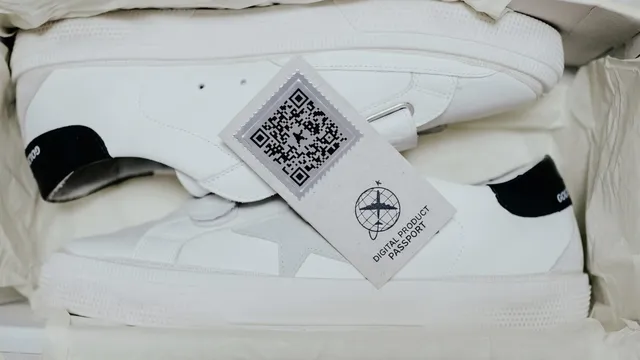
 Photo by Snapwire on Pexels
The category where DPP-style product data is moving fastest is luxury, and it is a useful preview of where consumer expectations may go more broadly.
Research cited by Vogue suggests that approximately 80% of luxury consumers express active interest in Digital Product Passports for categories like handbags, watches, and jewellery. In these segments, the reasons are clear: authenticity and provenance are not secondary considerations, they are central to the purchase itself. A handbag without a verifiable history is not the same product as one with it.
What is instructive about luxury is how the DPP is perceived in that context. It is not experienced as a regulatory form stapled to the product. It is experienced as an extension of ownership, a digital layer that carries the product’s story, confirms its legitimacy, and reinforces its value over time. It is closer to a certificate of authenticity than a compliance document.
This framing will not translate identically to contemporary or mid-market fashion. But the underlying dynamic, that verifiable information adds perceived value, is not exclusive to luxury. As DPP adoption spreads and consumers become more familiar with the concept, the expectation that information should be available and verifiable is likely to extend across categories.
Brands that understand this trajectory now, and build DPP infrastructure thoughtfully, will have an advantage. Not because they were early to a compliance deadline, but because they established a coherent product data practice before it became urgent.
Resale Is Where DPP Value Becomes Concrete
This is perhaps the most practically significant insight in the current consumer data: the presence of a Digital Product Passport meaningfully increases consumer confidence in secondhand purchases.
Research cited by Vogue reports that 56% of consumers are more likely to purchase a secondhand item when a DPP is available, because it provides verifiable information about the product’s origin, composition, and history. This is stated preference, not measured behaviour, it should be read as directional, not absolute. But the pain point it identifies is real.
The core friction in resale is uncertainty. A buyer looking at a secondhand garment is trying to answer questions the listing often cannot answer well: Is this material what it claims to be? How old is this product really? Is this the original composition or has the product been repaired or altered? Is this a genuine item from the brand it claims?
A DPP does not answer all of these questions, but it answers several of them, and it answers them with verifiable, item-level data rather than seller claims. That is a significant improvement over the current information environment in resale. Platforms like Loopli are already exploring how digital product passport consumer data can streamline secondhand transactions.
From a brand perspective, this has two implications that are easy to miss.
First, the DPP extends the brand’s relationship with a product beyond the first sale. When a garment is resold on Vinted, Vestiaire, or a brand-owned recommerce platform, the DPP travels with it. The brand retains a presence, informational and relational, in a transaction it would previously have had no visibility into. For brands building circular business models, including those exploring DPP-enabled resale and authentication, this is structural infrastructure, not a side feature.
Second, the resale market is growing fast. Secondhand fashion in Europe is no longer a niche. It is a significant and expanding share of how consumers engage with clothing. Brands that make their products more trustworthy in resale contexts are not just doing compliance work, they are making their products more desirable in a market that will be increasingly important.
What Consumers Are Actually Looking For Inside a Digital Product Passport
Consumer research across multiple studies points to a consistent set of questions that shoppers want answered when they engage with product transparency tools. Understanding these helps brands decide what to prioritise when building their DPP data model.
Material composition is consistently the top request. Consumers want to know what a garment is made of, fibre by fibre, percentage by percentage. This is already a legal labelling requirement in the EU, but DPPs allow this information to be richer, more granular, and linked to certificates rather than just printed on a label.
Care and repair guidance is the second major theme. Consumers who are engaged enough to scan a QR code are often also thinking about how to maintain the product. DPPs have the potential to deliver detailed care instructions, repair service links, and longevity guidance in ways that a care label cannot.
Durability and lifespan indicators are emerging as a relevant interest, particularly among younger consumers who are buying with longevity in mind. This is one area where the data model is still maturing, durability claims require definitions and standards that are not yet fully established at the regulatory level.
Environmental footprint data is frequently cited but also the most contested. Life Cycle Assessment, or LCA, data can be included in DPPs, but the methodology, scope, and comparability of LCA data across brands is highly variable. Brands should be careful here: including LCA data that cannot be substantiated or that is not methodologically comparable to peers creates more credibility risk than benefit.
The takeaway is not that brands need to populate every possible data field immediately. It is that they should start with the data that is already available and verifiable, composition, origin, certifications, and build from there. A DPP with accurate, well-structured composition and certification data is more useful to a consumer, and more credible to regulators, than a DPP stuffed with aspirational claims.
Willingness to Pay and the Commercial Signal
One of the hypotheses worth taking seriously is whether verified product information influences willingness to pay.
The UNECE, citing PwC’s Global Consumer Insights Survey, reports that 78% of consumers indicate they would pay more for products aligned with their personal values and preferences. Academic research in the field of product labelling and traceability further supports the idea that independently verifiable information, as opposed to brand claims, creates measurable perceived value.
None of this is DPP-specific, and it should not be oversold. Consumer stated preferences on willingness to pay often outrun their actual purchasing behaviour. But the directional signal is relevant: consumers do assign value to verifiable information, particularly when that information reduces uncertainty or confirms a decision they were already inclined to make.
For brands, this supports the case for treating the digital product passport consumer relationship not just as a cost of compliance but as a potential differentiator. A product that can substantiate its claims, on origin, composition, certification, and supply chain, is not the same product as one that cannot. The market may not perfectly price this difference today, but the trajectory suggests it will over time.
From Innovation to Expectation: How Norms Shift
One dynamic that is easy to underestimate is how quickly market norms shift once adoption reaches a certain threshold.
Consider how product photography, size guides, and customer reviews went from innovations to baseline expectations in e-commerce over the course of a decade. Or how sustainability labelling in food, organic certifications, fair trade marks, went from niche signals to mainstream expectations.
Digital Product Passports are at the very early stage of this curve. Scanning a garment to access verified product information currently feels novel. Within a regulatory environment that mandates DPPs for all textile products placed on the EU market, it will eventually feel normal, and then, for a significant share of consumers, it will feel expected.
The brands that benefit most from this transition will be those who used the early years to build a coherent product data practice, not those who scrambled to meet a minimum compliance threshold at the last moment.
This is not alarmism. It is pattern recognition. The regulation gives brands time. Use it.
What Fashion Brands Should Do Now
The consumer signals described in this article do not require brands to wait for perfect regulatory clarity before acting. Here is where to focus in the near term.
Start with material composition data. This is the most consistently requested digital product passport consumer data point, and it is the most foundational element of any DPP. Audit your current product data: How complete is it? How granular? Is composition data available at the SKU level, or only at the product family level? Getting this right is the first practical step, our guide to DPP data requirements covers what is required versus optional.
Map your certifications. Certifications, Global Organic Textile Standard (GOTS), OEKO-TEX, Bluesign, and others, are some of the most credible and consumer-legible signals you have. Make sure they are documented, up to date, and linked at the product level, not just referenced on your website.
Engage your suppliers early. DPP data does not come from your internal systems alone. It comes from the supply chain. Tier 1 suppliers (manufacturers), Tier 2 (fabric mills), and in some cases Tier 3 (fibre producers) all hold data that is relevant to a complete product passport. If you need help starting those conversations, see our guide on getting data from reluctant suppliers. The earlier you begin supplier data collection conversations, the smoother the process will be. Many suppliers are already fielding DPP requests from multiple brands, and those who are organised will be prioritised.
Choose a data model that is portable. This is a point I feel strongly about. As you begin building your DPP data infrastructure, make sure the system you use is built on open or interoperable standards. Proprietary, closed data models create lock-in. If your DPP data cannot move between platforms, be shared with resale partners, or be updated when suppliers change, you have built a compliance artefact, not a business asset. Portability is not a technical luxury, it is a strategic requirement.
Do not wait for perfect data. The most common paralysis I see in brands approaching DPP is the sense that they cannot start until they have everything. This is a mistake. Start with the data you have, structure it properly, and improve over time. A well-structured partial DPP is more valuable than a chaotic complete one. Regulatory timelines are still evolving; use that time to build incrementally.
Think about the resale journey from the start. If you have a recommerce programme, or if your products regularly appear in secondhand markets, factor in what information a secondary buyer would need. Build that into your DPP data model now. It is significantly easier to include this from the beginning than to retrofit it later.
FAQ: Digital Product Passports, Consumer Trust, and Resale
What is a Digital Product Passport (DPP) in fashion?
A Digital Product Passport is a structured digital record attached to a physical product, typically via a QR code or data carrier, that contains verified information about the product’s composition, origin, certifications, repair instructions, and supply chain data. Under the EU’s Ecodesign for Sustainable Products Regulation (ESPR), DPPs will become mandatory for textile and apparel products placed on the EU market. The exact scope and timeline for fashion is still being finalised through delegated acts.
Do consumers actually scan QR codes on garments?
Current evidence is mixed. Scanning rates are low in mass market segments today, but higher in luxury and among sustainability-engaged consumers. The more important question is whether the information available when someone does scan adds genuine value, clear composition, verified certifications, care and repair guidance. QR codes used for marketing links deliver poor experiences; DPPs structured to answer real product questions deliver useful ones.
How does a DPP increase trust with consumers?
By replacing brand claims with verifiable data. A garment that links to a GOTS certificate, a named manufacturing facility, and a composition breakdown at the fibre level is making a fundamentally different kind of claim than one that says “sustainably made” on the hang tag. Consumers who engage with product data, even a minority, tend to be high-value buyers with strong loyalty potential.
Why is DPP particularly valuable in the resale market?
Resale transactions suffer from information asymmetry: the seller has limited knowledge and the buyer cannot verify claims easily. A DPP attached to a product provides a consistent, item-level record that travels with the garment across ownership. This reduces uncertainty for secondary buyers, which research suggests translates to higher purchase confidence and, likely, higher resale prices for well-documented products.
Should brands worry about exposing supply chain data to competitors?
This is a real concern, and it deserves a nuanced answer. ESPR does not require brands to expose commercially sensitive supply chain details publicly. The regulation distinguishes between data that is publicly accessible (for consumers) and data that is accessible only to regulators and authorised parties (more detailed supply chain data). Brands should model data access tiers carefully and ensure their DPP platform supports granular access controls.
What consumer data points should be prioritised in an early DPP?
Start with: fibre composition (accurate, complete, at SKU level), certifications (GOTS, OEKO-TEX, Bluesign, etc.), country of origin for key production stages, and care and repair guidance. These are verifiable, consumer-relevant, and foundational to any more complex data layer you might add later.
Will DPPs give brands visibility into the resale market?
Potentially, yes, depending on how the DPP is structured. If a brand’s DPP system includes item-level tracking with a unique identifier per product, the brand can gain data on how and when products are resold, where they end up, and how long they stay in active use. This is commercially valuable for circular economy strategy. It requires intentional design of the DPP data model, not just regulatory compliance.
Is it too early to start building DPP infrastructure in 2025 or 2026?
No. The regulatory timelines for fashion DPPs under ESPR are still being refined, but the direction is settled. The brands that start now, building internal data practices, engaging suppliers, choosing interoperable platforms, will face significantly less disruption and cost when mandates arrive. Early movers in adjacent categories like luxury authentication have already demonstrated that first-mover investment in product data infrastructure pays dividends well beyond compliance.
Conclusion: Transparency Is a Product Feature, Not Just a Regulatory Task
The consumer research on Digital Product Passports is still early and still partial. Nobody can tell you with precision how many consumers will scan your QR codes, or exactly how much DPP data will shift purchase decisions in the contemporary fashion market over the next five years.
But the direction of travel is clear enough to act on.
Consumers are increasingly making decisions, about what to buy, what to keep, what to resell, based on their confidence in what a product actually is. Verified, accessible, portable product data makes that confidence possible. The DPP is the infrastructure for that confidence.
For fashion brands in Europe, the message is simple: do not treat DPP as a compliance project that starts the year before the mandate kicks in. Start building the data practice now. Start with composition. Add certifications. Engage your suppliers. Choose systems that keep your data portable and interoperable. Document progress honestly.
You do not need perfect data to start. You need structured progress.
The brands that treat transparency as a long-term relationship tool, rather than a form to be filed, are the ones that will be trusted by the next generation of fashion consumers. That is not a regulatory requirement. It is a competitive advantage.
Sources
- Renoon, “Consumer Research and Perception: Trust, Transparency, Resale,” January 2026: https://www.renoon.com/blog/consumer-research-and-perception-trust-transparency-resale
- European Commission, Ecodesign for Sustainable Products Regulation (ESPR), Regulation (EU) 2024/1781: https://eur-lex.europa.eu/legal-content/EN/TXT/?uri=OJ:L_202401781
- Forbes, Consumer Loyalty and Transparency Studies (cited in Renoon article)
- Vogue Business, DPP Consumer Interest in Luxury (cited in Renoon article)
- UNECE, Traceability and Transparency in Garment and Footwear Supply Chains: https://unece.org/trade/publications/traceability-and-transparency-garment-and-footwear-supply-chain
- PwC, Global Consumer Insights Survey (cited via UNECE): https://www.pwc.com/gx/en/industries/consumer-markets/consumer-insights-survey.html
- European Commission, Digital Product Passport Overview: https://single-market-economy.ec.europa.eu/industry/sustainability/digital-product-passport_en
- Global Organic Textile Standard (GOTS): https://global-standard.org
- OEKO-TEX Standard 100: https://www.oeko-tex.com/en/our-standards/oeko-tex-standard-100
Next step
See what a passport would already contain for one of your products.
Free, one product, from your public data. You get a dated report and a sample passport you can open.
Vincent builds Wetrack and its sister product Weloop from Carouge, Switzerland. 25 years of building digital products for brands, now spent on product data, passports and what the ESPR actually asks of a fashion brand.
LinkedIn (opens in a new tab)Reviewed for accuracy by the Wetrack team. Regulatory dates come from official EU sources and are re-checked when the rules move; the date at the top of this page tells you when. This guide is information, not legal advice.